

Gemstone origin reports are becoming more detailed
One of the year’s most significant changes is the expansion of laboratory origin services for coloured gemstones.
On 1 January 2026, the Gemological Institute of America introduced redesigned coloured-stone reports and expanded its country-of-origin services. Origin determination is now available for opal, peridot and demantoid garnet, alongside established services for gemstones including emerald, ruby, sapphire, alexandrite, Paraíba tourmaline and red spinel.
GIA also offers origin opinions for certain untreated jadeite and omphacite jade specimens from Myanmar or Guatemala.
The new reports are designed to present the most relevant gemmological information more clearly. According to GIA, its origin research is supported by a reference collection of approximately 32,000 samples gathered by field gemmologists.
For buyers, this change highlights an increasingly important principle: a gemstone’s identity is only one part of its story. Geographic origin, treatment status, colour characteristics and supporting documentation may all affect its desirability.
Image caption: Natural coloured gemstones awaiting identification and origin analysis.
Suggested alt text: Natural coloured gemstones being examined for identification and geographic origin.
Source: GIA’s announcement about its redesigned coloured-stone reports
Newly studied emeralds from central China
Emerald research continues to expand beyond the localities most familiar to collectors.
A recent study featured by GIA examined emeralds from a newly recognised source in Zhen’an County, Shaanxi Province, China. Researchers studied their standard gemmological properties, spectroscopy and trace-element composition.
Chemical composition and microscopic inclusions can help researchers compare emeralds from different geological environments. These features may also assist trained laboratories when forming an opinion about origin.
The research is a reminder that the map of important gemstone localities is not fixed. New occurrences can introduce material with distinctive inclusions, colours and geological associations.
For mineral collectors, specimens connected to emerging localities can be particularly interesting. Their scientific documentation may become an important part of their provenance.
Image caption: Emerald crystals illustrate how colour, inclusions and geological setting contribute to a specimen’s identity.
Suggested alt text: Natural green emerald crystals in their host rock.
Montana sapphire research connects primary and secondary deposits
Montana sapphires remain important to both gemmologists and collectors.
Recent research examined a primary sapphire occurrence at the French Bar sill near the Missouri River. The study compared sapphires still held in their natural rock matrix with rough, partly polished and faceted material.
Researchers found that the inclusions and trace-element chemistry closely resembled sapphires recovered from Montana’s secondary deposits.
This matters because sapphires found in river gravels have been transported away from their original host rock. Studying a primary occurrence gives researchers more information about the geological environment in which the crystals formed.
The work also shows why matrix specimens are scientifically valuable. A crystal in its original host material preserves geological context that may be absent from an isolated rough or cut gemstone.
Image caption: Montana sapphires occur in both primary host rock and secondary alluvial deposits.
Suggested alt text: Rough blue Montana sapphire crystals shown with natural host rock.
Arkansas turquoise receives scientific attention
Turquoise from the reopened Mona Lisa mine in Arkansas was also examined in recent GIA research.
The study combined field observations with standard gemmological testing and advanced analytical methods. The results confirmed that the material was genuine turquoise.
This type of research is useful because the word “turquoise” is sometimes applied loosely in commercial markets. Dyed materials, imitations, reconstructed products and other blue minerals can be represented in ways that confuse inexperienced buyers.
A locality-based scientific study helps document the properties of genuine material and creates reference information that laboratories can use in future comparisons.
Collectors should still evaluate each specimen individually. The name of a mine or locality does not remove the need for careful description, treatment disclosure and reliable provenance.
Image caption: Natural turquoise commonly forms as veins, nodules or crusts within a contrasting host rock.
Suggested alt text: Blue natural turquoise veins running through brown host rock.
Source for the emerald, sapphire and turquoise studies: GIA’s Winter 2025 Gems & Gemology research overview, published February 2026
Scientists continue to identify new mineral species
Mineralogy is still a developing science. Researchers regularly identify materials with chemical compositions or crystal structures that have not previously been recognised as distinct mineral species.
A 2025 review in American Mineralogist reported that 103 new mineral species were approved during 2024. A newer 2026 review covers discoveries reported during 2025 and species approved into early 2026.
These numbers demonstrate how much remains to be learned—even though thousands of mineral species have already been documented.
Many new minerals are microscopic and will never become jewellery stones or large display specimens. Their importance is scientific rather than commercial. They can reveal unusual chemical conditions, geological processes and information about environments ranging from mines to meteorites.
Source: American Mineralogist’s 2025 review of new mineral names
Jianmuite connects Earth with one of the Solar System’s oldest meteorites
One especially fascinating recently described mineral is jianmuite, an oxide containing titanium, aluminium and zirconium.
Researchers identified the mineral independently in two dramatically different settings: fragments of the Allende meteorite and chromite deposits in Tibet.
The Allende meteorite fell in Mexico in 1969. It is a carbonaceous chondrite containing some of the oldest known solid material from the early Solar System. Jianmuite found in the meteorite is thought to have formed among early mineral phases condensing from a cooling gas.
Terrestrial jianmuite occurs as extremely small inclusions associated with corundum in Tibetan chromite deposits. Scientists interpret these minerals as products of unusual conditions in Earth’s upper mantle.
The name refers to Jianmu, the “sky-ladder” tree of Chinese mythology, reflecting the mineral’s extraordinary connection between terrestrial and extraterrestrial environments.
Source: University of Maine report on the discovery and characterisation of jianmuite
Three new mineral species documented from New Mexico
The New Mexico Bureau of Geology and Mineral Resources announced three mineral species discovered at Cookes Peak in Luna County:
-
Raydemarkite, occurring as sprays of colourless needle-shaped or prismatic crystals
-
Virgilluethite, forming groups of yellow-green crystals with a platy growth habit
-
Stunorthropite, appearing as milky-white crystals that may replace the yellow mineral sidwillite
The minerals were named in honour of people who made significant contributions to mineral collecting, research and education in New Mexico.
Discoveries such as these also illustrate the continuing importance of experienced collectors. Careful field observation, specimen preservation and cooperation with scientific institutions can bring previously overlooked minerals to the attention of researchers.
Source: New Mexico Tech’s announcement of three new mineral species
Buyers should remain alert to altered and deceptive specimens
Alongside genuine discoveries, the mineral market continues to face problems involving misidentified, assembled, repaired or artificially altered specimens.
GIA’s latest research overview specifically noted increasing reports of deceptive gem specimens being sold in Pakistan. This is an important issue for reputable Pakistani miners and dealers as well as international buyers.
Pakistan produces exceptional aquamarine, topaz, tourmaline, quartz, fluorite and other collector minerals. The presence of deceptive material does not diminish that geological heritage, but it makes transparency especially important.
Collectors should ask practical questions before purchasing:
-
Is the specimen natural?
-
Has it been repaired or reconstructed?
-
Have crystals been attached to the matrix?
-
Has the colour been enhanced?
-
Is the stated locality supported by reliable information?
-
Are the photographs of the exact specimen being sold?
-
Can the seller provide additional photographs or video?
Repairs are not automatically unacceptable. Many important specimens have been professionally repaired. The problem arises when repairs, treatments or alterations are not disclosed.
Reliable dealers should provide clear descriptions and answer reasonable questions about condition and provenance.
What these developments mean for collectors
The latest news points towards a mineral and gemstone market that increasingly values documentation.
Appearance will always matter, but serious buyers are also paying attention to locality, treatment disclosure, laboratory analysis, condition and ownership history. A beautiful specimen accompanied by reliable information has a stronger and more useful identity.
For collectors, the best approach remains straightforward:
-
Buy from sellers who provide clear descriptions.
-
Request dimensions, weight and condition information.
-
Ask for additional photographs when needed.
-
Keep invoices, labels and laboratory reports.
-
Treat extraordinary claims with appropriate caution.
-
Remember that natural crystals commonly contain contacts, inclusions and fractures.
-
Seek independent laboratory testing for important gemstones when appropriate.
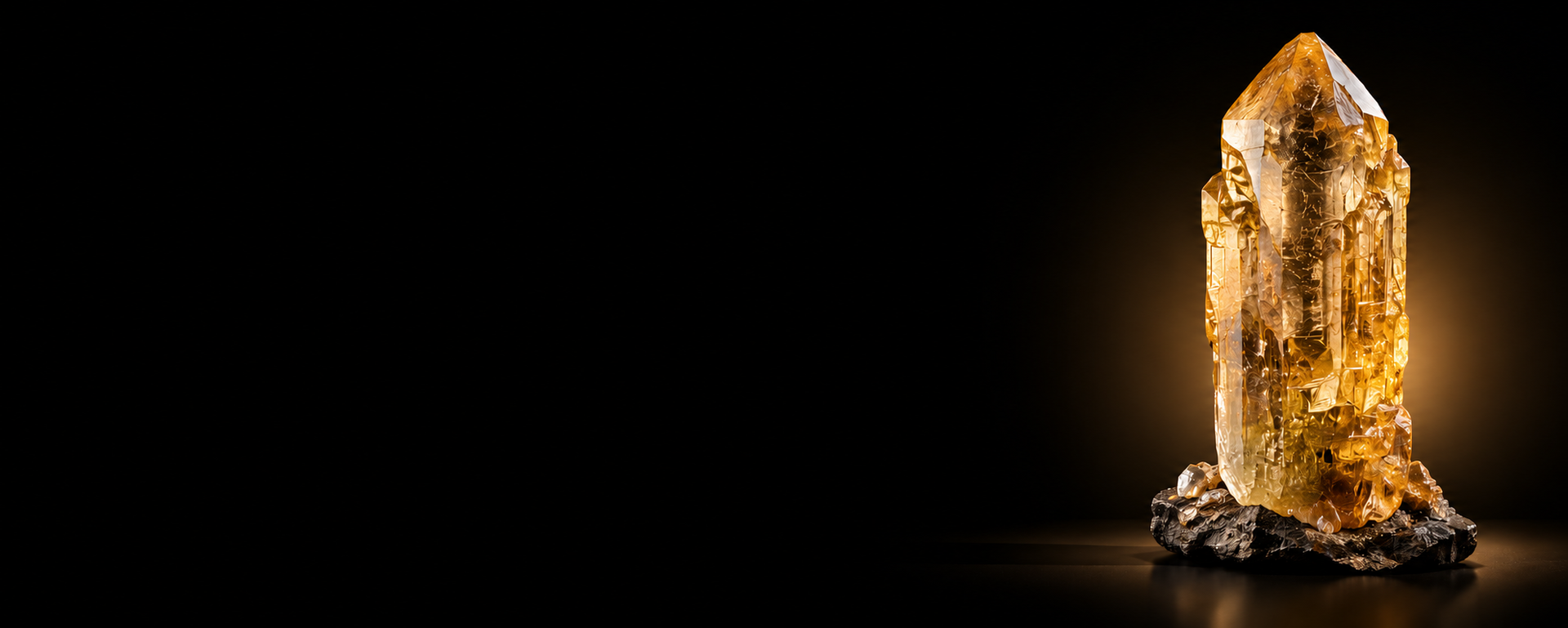
A living record of the natural world
Every mineral specimen records a particular combination of chemistry, pressure, temperature, time and geological history.
Some become transparent gemstones. Others form dramatic display crystals, microscopic new species or rare inclusions that can only be understood with advanced instruments. Together, they show that Earth—and even material arriving from space—still holds discoveries waiting to be recognised.
At Tormik Gems, we believe that accurate descriptions and honest disclosure are essential to responsible mineral collecting. Whether you are searching for a specimen from Pakistan, a particular crystal formation or material from an unusual locality, understanding its story is part of appreciating its beauty.
Looking for a particular mineral or gemstone? Contact Tormik Gems or submit a custom order request, and we will search our network for suitable specimens.
Email: info@tormikgems.com
WhatsApp: +92 348 5949959
No comments yet.